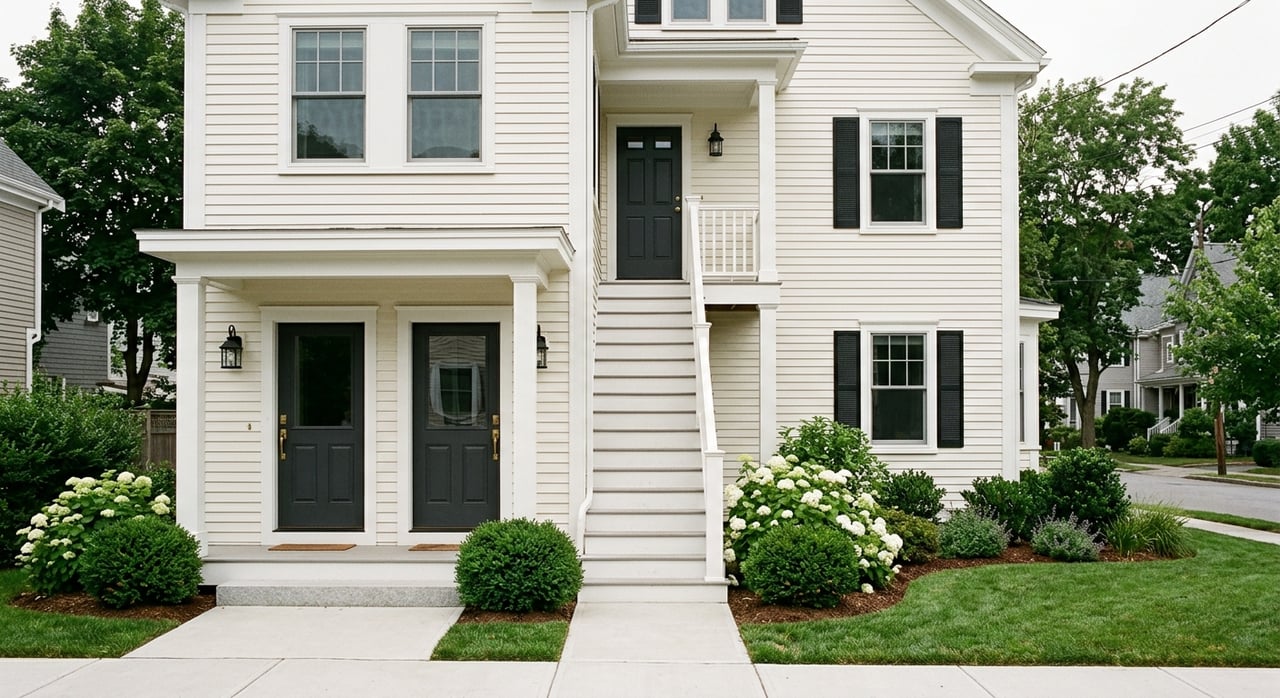
Are small multifamily deals in Griswold a smart buy right now? They can be, but only if you look past the list price and study rents, taxes, zoning, and repair risk with a clear eye. If you are thinking about a 2-family, 3-family, or 4-family property in Griswold, this guide will help you pressure-test the numbers and spot the details that can make or break a deal. Let’s dive in.
Griswold multifamily market basics
Griswold is a smaller housing market, with 11,690 residents and 4,890 households based on 2020 to 2024 ACS data. The town also has a 73.3% owner-occupied rate, which means the renter pool is meaningful but not especially deep compared with more heavily rental-driven markets.
That matters when you evaluate a small multifamily property. In a market with a thinner rental base, unit condition, utility setup, and pricing discipline matter even more because you have less room for underwriting mistakes.
Rent benchmarks in Griswold
A good first step is to separate benchmark rent from achievable rent. Griswold sits in HUD’s Norwich-New London HMFA, where the FY2025 fair market rent for a 2-bedroom unit is $1,625, including tenant-paid utilities except telephone, cable, and internet.
At the same time, public rental listings show a wider and often higher asking-rent range. Current 2-bedroom options in Griswold have been listed from about $1,300 to $2,474+, and one public rental source reported an average rent of about $1,900 as of late June 2026.
That spread tells you something important. Not all 2-bedrooms in Griswold compete in the same lane. Older units with dated finishes or bundled utilities may land near the lower end, while renovated units with stronger amenities may push much higher.
Why condition changes the math
In Griswold, tenants are seeing a mix of older homes and newer townhome-style product. Local rental examples include features like shared laundry, in-unit washer and dryer, renovated kitchens, wood floors, separate utilities, off-street parking, and even newer community-style amenities such as private parking, patios or decks, garages, fitness space, clubhouse access, playgrounds, and trails.
That means a small multifamily owner is not just competing on bedroom count. You are also competing on everyday livability, convenience, and whether the unit feels updated and easy to live in.
Griswold inventory and pricing snapshot
Current multifamily inventory in Griswold appears modest but active. Public listings have shown 7 multifamily properties ranging from $209,900 to $549,900, including 2-family and 4-family options, with some already pending or contingent.
Recent activity also shows that deals do get done here. A Griswold multifamily property at 123 N Main St reportedly sold for $327,500 in January 2026, which gives buyers and sellers at least one recent point of reference in a relatively small market.
Start with the rent roll
Before you get excited about projected cash flow, study the current rent roll line by line. Look at each unit’s actual rent, lease end date, security deposit, delinquency status, utility responsibility, and whether the tenant is month-to-month or under a fixed lease.
This step matters because asking rents do not pay your mortgage. Actual in-place income is what you inherit on day one, and in a small multifamily deal, one under-market or nonpaying unit can change the whole picture fast.
Key rent roll questions
- What is each unit currently rented for?
- When do leases expire?
- Which utilities does the landlord pay?
- Are any tenants behind on rent?
- Are there written leases in place?
- Do deposits appear to match Connecticut rules?
Use simple underwriting first
When you evaluate a Griswold small multifamily, start with a basic back-of-the-envelope model before building a full spreadsheet. This helps you decide quickly whether the deal deserves deeper work.
Here is the illustrative example from the research. If you buy a 2-family for $300,000 and each unit rents for $1,550, your scheduled annual rent is $37,200. After a 5% vacancy allowance, effective gross income drops to $35,340.
That sounds workable at first glance, but property taxes alone can take a large bite. Using Griswold’s FY2025 mill rate of 27.18 and Connecticut’s 70% assessment method, annual taxes on a $300,000 property come to about $5,708.
Before you even reach debt service, you still need to account for insurance, repairs, reserves, snow removal, possible management, and any landlord-paid utilities. That is why a deal that looks fine at the list price can still disappoint once real operating costs hit the page.
Don’t underestimate property taxes
In Connecticut, taxes can reshape your cash flow quickly. Real estate is assessed at 70% of fair market value, and the tax bill is calculated by multiplying assessed value by the mill rate and dividing by 1,000.
For Griswold, the FY2025 mill rate for real and personal property is 27.18. At that rate, a $500,000 property implies roughly $9,513 in annual property taxes.
That is a major line item for a small building. If you are comparing two properties with similar rent potential, the one with lower tax drag may offer a much healthier margin.
Zoning matters more than many buyers think
Griswold zoning deserves careful attention, especially if you are looking beyond a 2-family. The town’s regulations state that two-family dwellings are permitted by right in R-40, R-60, and R-80 districts, provided the lot area is twice what is required for a single-family dwelling.
The same zoning text says the section for multi-family dwellings has been removed in its entirety and intentionally left blank. That does not automatically mean every 3-unit or 4-unit property is impossible, but it does mean you should verify existing use rights, nonconforming status, and any approval path before assuming the current setup can be expanded, rebuilt, or reconfigured.
Why this changes deal risk
A legal 2-family often has a clearer path than a 3-unit or 4-unit property with zoning questions. If a larger building has uncertain status, your financing, renovation plan, insurance approach, and resale pool may all be affected.
For many buyers in Griswold, that makes the clean, well-documented 2-family one of the easier small multifamily plays to evaluate.
Focus on the fastest-moving expenses
Older Connecticut housing stock can produce surprise costs if you gloss over the operating budget. In Griswold, some of the most important expense lines to study are:
- Real estate taxes
- Insurance
- Heat or electric if landlord-paid
- Water and sewer
- Trash removal
- Snow and landscape
- Turnover repairs
- Capital reserves
These categories matter because two buildings with the same rent can perform very differently. A property with separate utilities, solid mechanicals, and lower turnover needs may be far more durable than a cheaper building with hidden expense pressure.
Renovation priorities that support rent
If you are buying for value-add, start with the improvements tenants notice every day. In Griswold, the research points to basics like clean kitchens and baths, durable flooring, reliable heat, laundry access, parking, and clear utility metering as the upgrades most likely to help a property compete.
Those items may not sound glamorous, but they often matter more than cosmetic extras. In a market where newer product offers stronger amenities, an older 2-family usually wins by being functional, clean, and predictable rather than flashy.
Features that can strengthen appeal
- Updated kitchens and bathrooms
- Easy-care flooring
- Reliable heating systems
- On-site laundry or in-unit laundry
- Off-street parking
- Separate utilities where possible
- Well-kept common areas
Understand Connecticut security deposit rules
If you plan to self-manage or review existing tenant files, Connecticut’s deposit rules are worth knowing. The state says landlords may require no more than two months’ rent as a security deposit, reduced to one month for tenants age 62 or older.
The deposit must be held in a Connecticut escrow account and earn annual interest. After the tenancy ends, the landlord must return the deposit or provide a written damage notice within 21 days.
These rules affect both compliance and transition planning. If you are buying an occupied property, reviewing lease files and deposit handling should be part of your due diligence.
Match the exit strategy to the asset
Not every Griswold multifamily has the same buyer pool when it comes time to sell. Two-family homes can appeal to both investors and owner-occupants, while 3-unit and 4-unit properties may be more sensitive to zoning status, financing structure, and tenant profile.
That difference can shape your long-term plan from day one. A stabilized, well-documented property may sell as a cash-flowing asset, while a poorly managed building with unclear records or occupancy issues is more likely to trade at a discount.
A practical Griswold deal checklist
Before you move forward on a small multifamily property in Griswold, ask yourself these questions:
- Are current rents supported by leases and payment history?
- How do in-place rents compare with local benchmark and asking-rent ranges?
- Who pays for heat, electric, water, and trash?
- What are the projected taxes using Griswold’s current mill rate?
- Is the property a legal 2-family, or does a 3+ unit setup need deeper zoning review?
- What repairs are needed now versus later?
- Are security deposits being handled under Connecticut rules?
- Does the exit strategy fit the building type?
If you can answer those questions clearly, you are already ahead of many buyers.
Small multifamily investing in Griswold can work, but it usually rewards careful underwriting over optimism. The best deals are often the ones where rents, taxes, zoning, condition, and exit strategy all line up without forcing the numbers.
If you want a local, practical read on a Griswold 2-family or small multifamily opportunity, schedule a free consultation with Miles A Lafemina. He can help you evaluate the numbers, the property, and the local context before you commit.
FAQs
What rent should you use when evaluating a Griswold multifamily deal?
- Start with actual in-place rent, then compare it with local asking rents and HUD’s 2-bedroom fair market rent of $1,625 for the Norwich-New London HMFA as a reference point, not an automatic projection.
What property taxes should you expect on a Griswold multifamily property?
- Griswold’s FY2025 mill rate is 27.18, and Connecticut assesses real estate at 70% of fair market value, so taxes should be modeled carefully because they can take a large share of gross income.
What zoning issue matters most for Griswold 3-family and 4-family properties?
- Griswold zoning clearly addresses two-family dwellings in certain districts, but the multi-family dwellings section was removed from the zoning text, so any 3+ unit property should be checked carefully for legal status and approval considerations.
What upgrades help an older Griswold multifamily compete for rent?
- The most practical upgrades are usually updated kitchens and baths, durable flooring, reliable heat, laundry access, parking, and separate utilities where possible.
What Connecticut security deposit rules affect Griswold rental property owners?
- Connecticut limits most security deposits to two months’ rent, or one month for tenants 62 or older, requires deposits to be held in a Connecticut escrow account with annual interest, and requires return of the deposit or written damage notice within 21 days after tenancy ends.